Free 30 minute self-paced online course on including consumer and community involvement in grant writing. Includes tips to enhance the chance of grant success by including integral CCI components in relevant aspects of grant applications. Participants will receive a certificate of completion at the end of the course.
Free 30 minute self-paced online course that describes the fundamentals of consumer and community involvement in health research. Designed for consumers, community members, researchers, administrators, policy makers and organisations involved in health research. Participants will receive a certificate of completion at the end of the course.

A clear, step-by-step guide for embedding meaningful consumer and community involvement into health and medical research systems. The Handbook is designed to be adaptable and user-friendly, encouraging organisations and individuals to tailor it to their specific context and needs. There are also dedicated resources for consumers on topics such as approaching an organisation and assessing […]
A series of six self-paced online modules, providing general and practical information and strategies to meaningfully conduct and embed consumer and community involvement in research and healthcare improvement projects.
The toolkit provides practical advice for researchers and research organisations wishing to conduct patient-centred clinical trials. Using an interactive map, the Toolkit provides guidance and tools to help plan, deliver, evaluate and report consumer and community involvement and engagement activities. The Toolkit also contains a small but growing collection of dedicated resources for consumers and […]
Practical strategies to seek and support diverse engagement and participation, as well as tips for success.
This framework lists a range of strategies that enable current or potential consumers to participate in service planning and decision making. Additional considerations for Culturally and Linguistically Diverse communities are included.
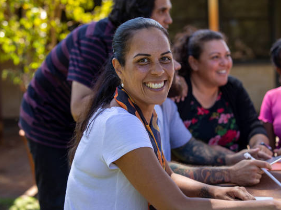
The NSW Government, Agency for Clinical Innovation, Co-design Toolkit: Working Together with Aboriginal Communities is designed to support respectful, culturally grounded collaboration with Aboriginal communities in service design and improvement. The toolkit emphasises the importance of bringing Aboriginal perspectives—ways of being, knowing, and doing—to the forefront of the co-design process. It draws on the 8 […]

If you are looking at co-design with Aboriginal and Torres Strait Islander people and communities, this website provides tips and resources around best practice for successful engagement.
The Lowitja Institute’s 2020 discussion paper, Aboriginal Participatory Action Research: An Indigenous Research Methodology Strengthening Decolonisation and Social and Emotional Wellbeing, defines and promotes Aboriginal Participatory Action Research (APAR) as a transformative Indigenous research methodology.

This discussion paper builds on findings from the Murru Minya study, a national investigation into how ethical processes are implemented in Aboriginal and Torres Strait Islander health research. It provides a comprehensive overview of the principles and governance frameworks that support culturally safe, respectful, and ethical research practices.

The purpose of the AIATSIS Code of Ethics for Aboriginal and Torres Strait Islander Research is to promote ethical, responsible, and culturally respectful research practices that uphold the rights and interests of Aboriginal and Torres Strait Islander peoples.